


Article
Wet Spring Raises Mineral Risks as Livestock Head to Grass
An exceptionally wet start to 2026 across Ireland is set to create challenges at turnout, highlighting the importance of practical mineral supplementation – particularly through the use of mineral buckets.
Saturated soils and persistent rainfall have left many farms facing difficult grazing conditions, with limited drying, heavier covers, and reduced grass quality expected in early turnout.
Turnout conditions increasing mineral risk
Prolonged wet weather can have a significant impact on both soil and grass mineral content.
Waterlogged soils reduce root activity and limit the plant’s ability to take up key minerals. At the same time, livestock are more likely to ingest soil in wet conditions, increasing intake of antagonists such as iron and molybdenum, which can interfere with copper and other trace element absorption.
These challenges are often compounded at turnout, when animals move abruptly from a controlled winter diet to variable spring grass.
Grass quality and magnesium concerns
As growth picks up, rapidly growing grass can further dilute mineral concentrations.
Spring grass is typically low in dry matter and can be high in potassium and nitrogen. This combination increases the risk of magnesium deficiency, particularly in freshly calved cows, leading to issues such as grass tetany.
Unlike other minerals, magnesium cannot be stored effectively in the body, making consistent daily intake essential during high-risk periods.
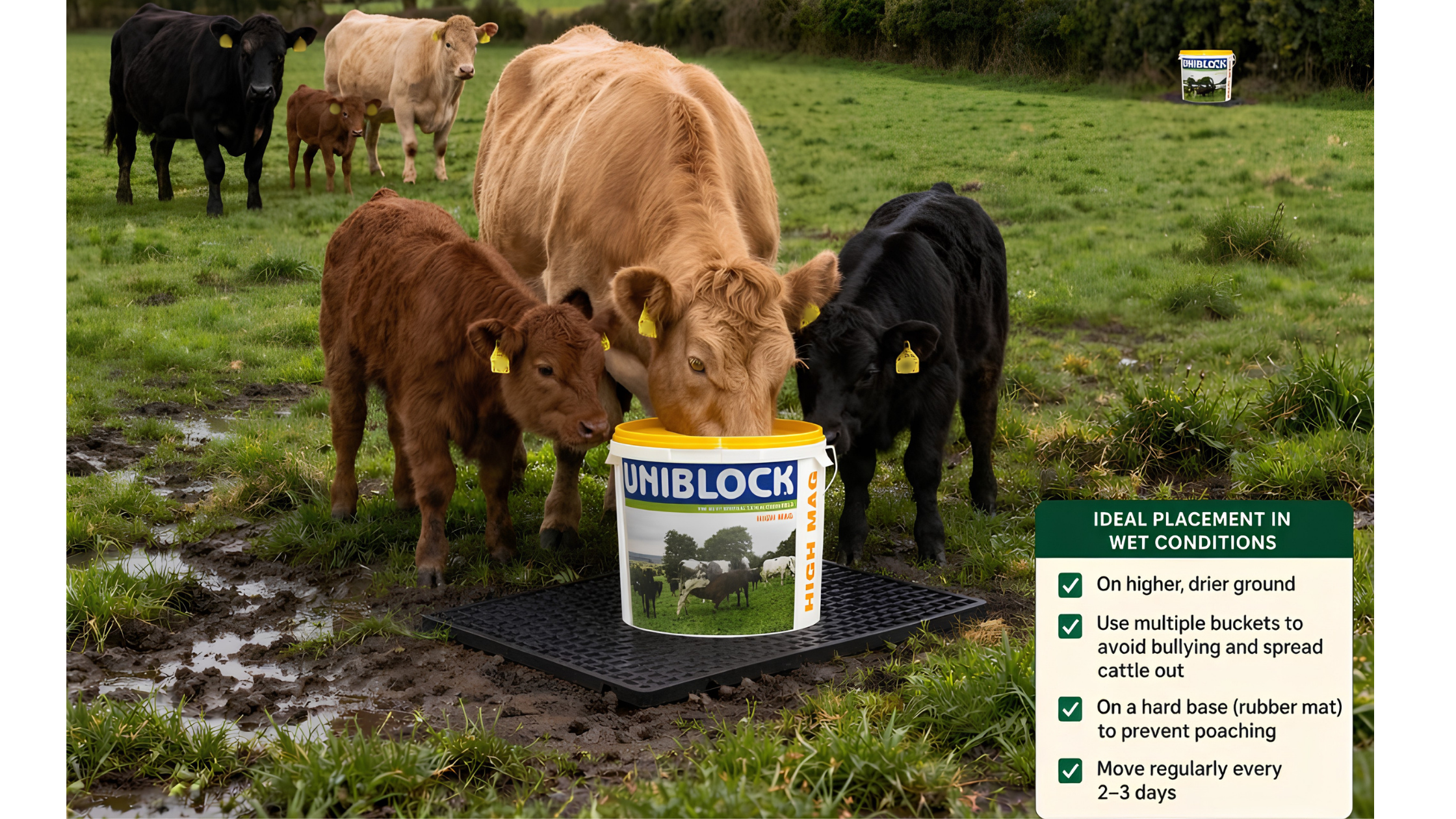
Mineral buckets: a practical turnout solution
Given the variability at turnout, mineral buckets offer a simple and flexible way to support livestock.
They provide:
· Ad-lib access to essential minerals
· A consistent intake without handling stress
· Flexibility across paddocks and grazing groups
At turnout, intake can be unpredictable, so having a readily available mineral source in the field is important. Mineral buckets work particularly well on farms with limited infrastructure or where supplementing through feed or water is not an option.
Managing intake and expectations
While mineral buckets are convenient, correct placement and monitoring are key to success.
Practical tips include:
· Place buckets near water or high-traffic areas – but move bucket every few days to avoid area becoming poached.
· Ensure sufficient buckets per group to avoid bullying and spread cattle out to avoid poaching around one bucket.
· Monitor intake regularly, especially in the first weeks after turnout.
· A hard base such as a large rubber mat will help keep buckets stable and the surrounding area cleaner.
Early turnout conditions may increase demand, so farmers should check and adjust consumption accordingly. Spring days and nights can still be very cold, wet and windy. These weather conditions can aggravate the problem of staggers.
Supporting performance through the grazing season
While forage testing can provide useful insights, it represents only a snapshot of mineral availability. In a year like this, where conditions are highly variable, a consistent supplementation strategy is essential.
Trace element status underpins immunity, growth and fertility. Taking a practical, proactive approach at turnout can help maintain animal performance and avoid issues later in the season.
Conclusion
Wet ground, variable grass quality, and reduced mineral availability are all realities facing farmers this spring.
Ensuring livestock have access to a reliable mineral source at turnout—such as well-managed mineral buckets—will be key to maintaining health and performance in the weeks ahead.