


Article
Supplementing the ewe in late pregnancy aids lambing success
Providing the correct nutrition and mineral supplementation to a pregnant ewe in the eight weeks before lambing will influence her colostrum production and metabolic health as well as the birthweight, vigour, and survival of her lamb.
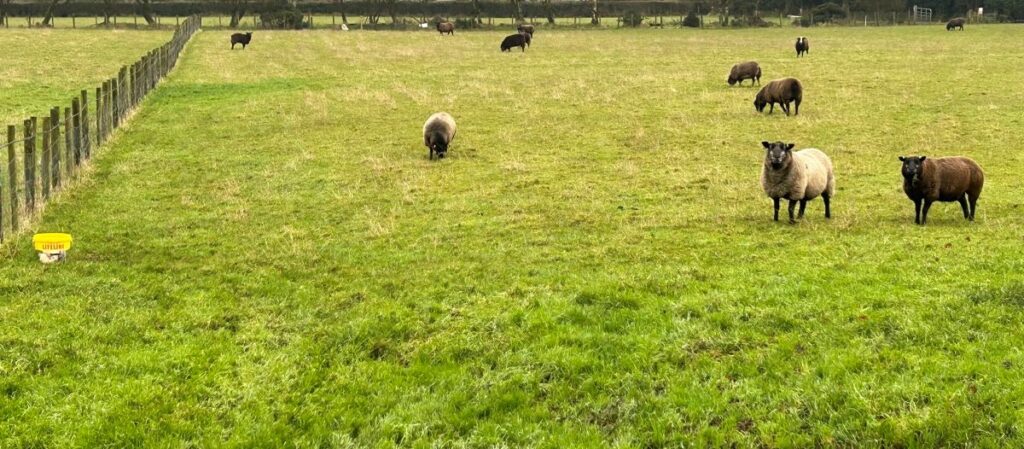
It all starts with getting the ewe in the correct body condition score (BCS) at lambing for her breed as those in poor condition tend to produce less colostrum and milk while over-conditioned ewes are at higher risk of experiencing difficulties at lambing.
Aim for 3 – 3.5 in lowland breeds and 2.5 – 3 in hill ewes.
Three-quarters of foetal growth occurs in the last two months of pregnancy, greatly increasing the ewe’s nutritional requirements.
However, as a lamb develops, space is the ewe’s rumen is reduced and this can suppress appetite by up to 30% which makes it difficult for her to achieve sufficient intakes to meet her nutritional requirements.
Additional supplementation is therefore necessary. She needs those extra nutrients to maintain body reserves, to produce colostrum which begins in the final weeks of pregnancy when most of the udder development is taking place, and to yield a good supply of milk in the weeks after giving birth.
Feed buckets tailored to need in the lead-up to lambing, incorporating all the requisite protein, energy, minerals, and vitamins, are the ideal way to supply essential nutrients.
Research (Crosby et al., 2016) has shown that when ewes have access to mineral blocks they take in more dry matter (DM) (P < 0.05), and energy and protein too, and they will also have higher water intakes – 2.24 litres per ewe per day compared to 0.77 litres.
By-pass protein (DUP) is required for boosting colostrum quality and milk yield, and for udder development, therefore providing ewes with a good supply before lambing is crucial.
So what are the essential minerals and trace elements required by the ewe and her unborn lambs in those final two months?
Calcium and magnesium
These minerals are necessary for foetal growth and for the ewe’s own physiological needs. Research has shown that both have a significant effect on the regulation of energy balance in ewes (Ataollahi et al., 2018).
During the last few weeks of gestation, the unborn lamb requires 19.4mg/day/kg bodyweight calcium (Braithwaite, 2007) which means that the ewe must replace the equivalent of circulating blood calcium levels daily if she is to adequately supply and meet that demand. If she is unable to do so it can result in subclinical hypocalcemia (milk fever), especially in ewes bearing multiple lambs (Martinez et al., 2014).
Selenium
This trace element helps to mobilise brown fat and is particularly important for newborn lambs.
Selenium is transferred across the placenta therefore providing ewes with adequate levels during late pregnancy will help ensure lambs are born with sufficient reserves.
If an animal is born deficient in selenium it is often slow to thrive, is at increased risk of hypothermia, and may also develop white muscle disease.
Cobalt
As an important constituent of vitamin B12, cobalt helps lambs to stand and therefore suckle their first feed of colostrum earlier. It also facilitates energy metabolism which can help meet the energy needs of the pregnant ewe and reduce the risk of twin lamb disease.
Zinc
This trace element is involved in both innate and adaptive immunity. It is also important for maintaining skin and hoof integrity and mammary tissue (Suttle. 2010).
Zinc is involved in the synthesis of keratin in the teat canal, protecting against bacterial infection and promoting regeneration in the period between milking and nursing events. According to Capuco et al., 1990; Spain, 1994; and Suttle, 2010, it may be one method by which zinc decreases mastitis susceptibility.
Iodine
In common with other trace elements, iodine is important for both the ewe and the unborn lamb. Iodine deficiency can result in the ewe aborting in late pregnancy or producing dead full term lambs.
A lamb born deficient in iodine will often have an enlarged thyroid gland and a low birthweight, be weak, and have little or no wool.
Vitamin E
This antioxidant helps support ewe performance during the demanding pre-lambing period and will also improve the health and immunity of the unborn lamb.
The immune status of the ewe impacts the maternal transfer of immune cells in colostrum therefore by looking after the needs of the pregnant ewe the requirements of the newborn lamb will be taken care of too as a lamb is born devoid of immunity and relies completely on colostrum to protect it from infection.