


Article
Managing the suckler cow and calf post-calving
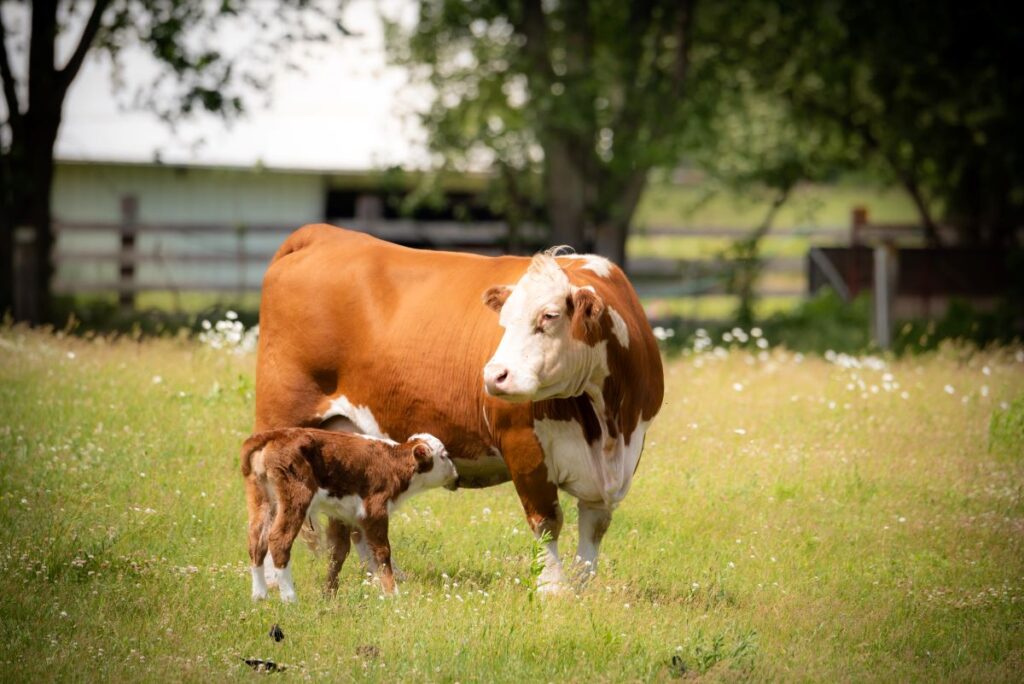
Suckler cow management post-calving is just as important as pre-calving care. A fresh calver needs the right nutrition to stay healthy, produce milk, and to resume her cycle to conceive again.
Key considerations after calving
Body condition score (BCS) in suckler cow management
Monitor BCS to ensure the cow doesn’t lose too much condition soon after calving. At this stage there is a great demand on her body from producing milk for her calf.
She will naturally prioritise energy towards milk production ahead of her own maintenance needs. However, this can have repercussions for her future breeding ability.
Body condition is scored on a scale of 1- 5 with 1 judged as very lean to 5 as obese.
To achieve optimum fertility, aim to maintain a score of between 2.5 – 3 post-calving.
If there are thin and fat cows in the herd, grouping according to condition is a good option. This can allow for tailored feeding to achieve optimum condition.
To stay profitable, aim for a 365-day calving interval. This leaves approximately only 80 days between calving and conception to achieve that target. Nutrition and good management are key to helping her recover, care for her newborn calf and breed back on time.
Why cow history matters in suckler cow management
Every herd has cows that are easier to get back in calf than others.
Considering each cow as an individual may help with breeding decisions.
Problematic and high-risk cows, those with the following in their history, are likely to find it more difficult to conceive:
- Calving difficulty – often a cow that experienced a difficult birth or required a caesarean will take longer to resume her cycle
- Incorrect BCS at calving – being either too fat or too thin can have negative effects on future fertility
- Suffering metabolic disease, such as sub-clinical or clinical milk fever, retained cleansings, or metritis, around calving.
Post-calving is a good time to reflect and make decisions on which cows should exit the herd – problematic cows are not profitable cows.
Diet
Post-calving, there is quite often a transition in diet, for example a spring-calving cow that has been housed and fed silage in the winter is turned out to grass when conditions allow.
Monitoring the quality and quantity of grass is extremely important to ensure she receives adequate energy and nutrients from the grass to satisfy her needs.
This can be achieved through a full grass quality analysis, to include mineral profile, and through measuring with a rising plate meter to assess quantity.
The energy (ME) and dry matter (DM) requirements for the first 60 days of lactation are 135MJ ME/day equating to 13.5kg DM/day, assuming the grass is at 12ME.
Collecting data and monitoring grass will flag up when supplementary feed is needed.
Mineral requirements
Pre-empting possible mineral deficiencies in post-calving cows is important.
If shortfalls are suspected, test for trace element deficiencies through blood sampling or liver biopsies.
Calcium is a necessary mineral which should be supplemented post-calving to support milk production. Prior to calving, calcium intakes should be limited to encourage mobilisation from the bones.
Magnesium is a daily requirement for the post-calving cow, especially if she is grazing lush spring grass which is generally low in this mineral. Daily intakes of magnesium will help prevent grass tetany as the cow cannot store magnesium in her body reserves.
Phosphorus deficiency during the breeding season can severely affect reproduction by causing silent heats, irregular oestrus, and low conception rates.
Iodine is always quite low in Irish-based forages and is a key mineral in hormone production which supports fertility and early foetal growth.
Selenium plays a role in encouraging a healthy immune system as well as acting as an antioxidant in combination with vitamin E.
Cobalt is essential for the production of milk and vitamin B12, as well as improving conception and growth rates.
Other trace elements, such as manganese, zinc, and copper, also aid fertility and enhance skeletal development too.
Leave a Reply