


Article
Risk to sheep health after wet spring reduces salt levels in grass
After Ireland experienced its wettest March since 1963, sheep could struggle to get sufficient salt in their diet from grazing alone. Records show that up to 239.88mm of rain fell in some areas and the number of wet days ranged from 20 to 29.
When moisture is at high levels, nutrients can be lost from the soil profile through drainage as leaching will occur. It is no surprise that many sheep farmers are reporting seeing behaviours that suggest ewes and lambs are searching for nutrients, including digging up the soil.
When nutrients, particularly salt, cobalt, and phosphorus, are lacking in the soil, a depraved appetite, or Pica syndrome, can occur. This typically presents itself as animals chewing or licking objects other than their normal diet – the ground, other animals, and drinking urine. They might lick or eat salt-enriched sub-soils where erosion or tracks expose the sub-soil.
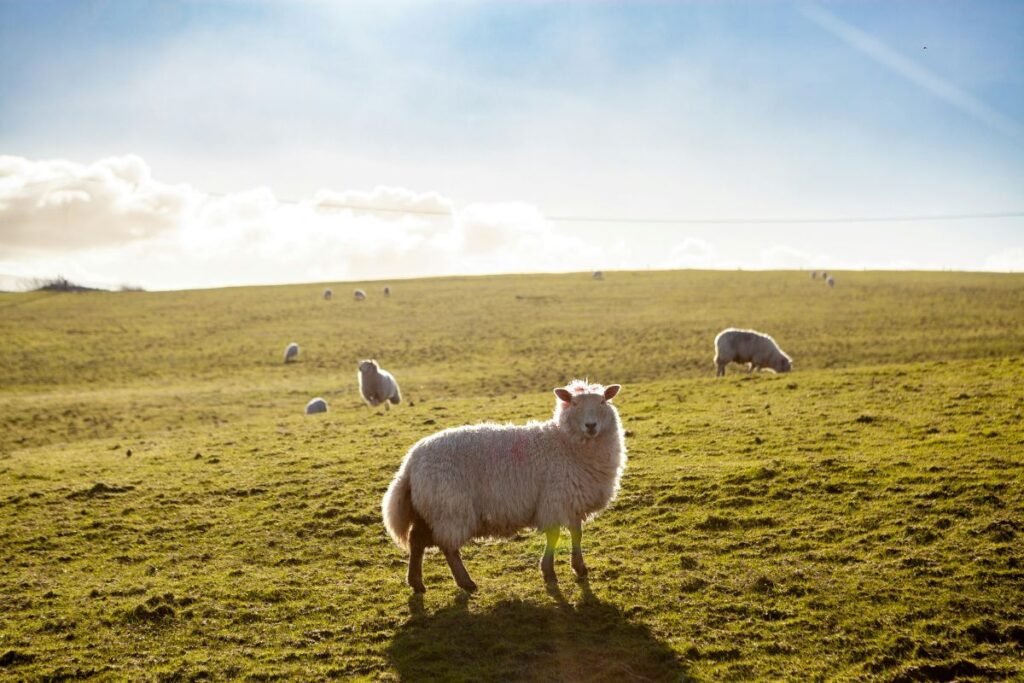
Salt deficiency can lead to diminished appetite, reduced growth and milk yield. Severe deficiency can even cause seizures and death. Salt, made up 40% sodium and 60% chloride, is a key mineral in an animal’s diet. Sheep, for example, require salt to thrive, lactate, reproduce and remain profitable.
Salt is linked to several metabolic processes:
Fluid balance (electrolytes)
Maintaining blood pressure and volume
Nerve and muscle function
Hydrochloric acid production in the stomach – digestion
Making saliva – buffering the rumen and avoiding acidosis and looking after the rumen bugs.
The sodium (Na) in salt interferes with potassium uptake thus lowering the risk of low magnesium uptake. Adequate salt levels in the diet can also help reduce the danger of grass tetany in sheep. As salt cannot be stored in the body, regular intake is needed.
Providing sheep with a mineral lick with a high sodium (salt) and molasses content is strongly recommended to maximise intakes, especially after long periods of rainfall and at peak growing season when tetany is likely. Licks which have a high molasses content are darker in colour.
A study (Aspinall et al., 2004) found that 0.07% Na should provide sufficient sodium for adult sheep maintenance and for lamb growth; at 0.04% Na herbage dry matter is deficient. Ewes at flushing and during lactation required more sodium – in the study 0.05% Na showed deficiency. The requirement is 0.09% Na.
When grass is very low in sodium due to the leaching effect of rain it will also reduce the abundance of alkaline elements, that is calcium, magnesium, and potassium, from the soil into runoff water, leaving acidic elements such as aluminium. This can depress phosphorus absorption and cause energy deficit in livestock.
As every farm is different, it is good practice to regularly analyse soil and grass to know what animals are eating. This will give a better insight into when to supplement stock, and with what, to avoid deficiencies.
Leave a Reply