


Article
Why colostrum holds key to lamb health and growth
Lambs that drink good volumes of clean, good quality colostrum quickly after they are born have the best chance to absorbing antibodies directly into their blood, giving them temporary immunity until they develop their own.
Colostrum, otherwise known as ‘beestings,’ is the first milk a ewe produces once she has lambed.
The newborn lamb relies on good-quality colostrum to protect it from disease during its first few months of life, a time when it is most vulnerable to infection.

Colostrogenesis, the process which sees the pregnant ewe’s mammary cells proliferating and differentiating ahead of lactation, starts about five weeks before lambing so it is more important than ever to look after her during this crucial time.
Providing the ewe with the correct nutrition during mid and late pregnancy is essential to promote udder development, and colostrum production and quality, to ensure adequate quantities are available for the immunocompetent lamb, and that the milk production that follows is adequate to cover its needs when it is growing.
Ewes that are underfed during pregnancy also take longer to interact with their offspring because they spend a greater time eating, and have poorer mothering ability overall.
Colostrum affects several developmental phases of the baby lamb therefore it is critical that what is produced is of high quality to ensure maximum future productivity.
Newborn lambs must be vigorous so that they can rapidly find the udder, locate the teat, and suckle their mother immediately after birth.
Target values
Colostrum should contain over 50g/litre immunoglobulin G (IgG) or, if measuring with a refractometer, 22% Brix.
Testing for quality
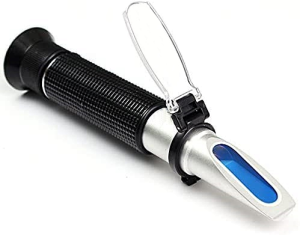
For reassurance that the lamb is receiving colostrum at a quality that is adequate for its needs, use a handheld Brix refractometer. This relatively cheap tool only requires a couple of drops of colostrum to test for quality.
For farmers who are experiencing health issues in their young lambs, this approach is also a good way of cross-checking whether changes that can influence colostrum quality need to be introduced, around pre-lambing management for example.
Colostral antibodies
IgG is the main antibody associated with providing immune protection to the lamb.
Maternally-derived factors such as parity, nutrition, and hormones all affect colostrum quality.
Intakes
Newborn lambs should consume 200ml of colostrum in the first two hours, and 200ml per kg of bodyweight in the first day of life – this means that a 5kg lamb requires a litre of colostrum in the first 24 hours.
Factors affecting transfer of passive immunity (TPI) to the lamb
- • A lengthy gap between the lamb being born and suckling
- • Colostrum yield and quality
- • Dam parity
- • Dam temperament
- • Litter size
- • Mothering ability
- • Lamb vigour
- • Dystocia
- • Teat or udder placement that makes it difficult for the lamb to suckle
- • Standard of hygiene
Studies show why colostrum is vital to lamb health and growth
Colostrum is a key player in the development of the lamb’s immune system, its growth and thermoregulation, and is the foundation of the ewe-lamb bond.
It will not only improve the lamb’s chances of survival but when it consumes high quality and adequate volumes in the first few hours and days after it is born, there are positive effects on future production, development, and reproductive efficiency (Bartol et al., 2017).
Many studies (Bagnell et al., 2005; Bartol and Bagnell, 2012; Rahman et al., 2014; George et al., 2018) found a positive correlation between colostrum feeding in pigs and improvements in their reproductive tract development compared to piglets fed a milk replacer.
Hypothermia is a big problem in newborn lambs, especially so in those that have a low birthweight or are born from undernourished dams (Sykes, 1982).
Although the baby lamb is born with reserves of brown fat, which are a major source of energy, these only account for 2% – 4.5% of their bodyweight.
They must metabolise these reserves to generate heat before colostrum feeding as it only takes 15 minutes after their birth for their internal temperature to reduce by 1-2°C. To compensate for this heat loss, lambs must increase their heat production by up to 15 times (Alexander, 1962).
In this situation, colostrum is a great energy source.
Litter size also has a role to play in colostrum yield. A study by McNeill et al., (1988) found that 30% of twin-bearing ewes had inadequate colostrum available for their lambs and that was the case for 10% of single-bearing ewes.
Top tips
- • Keep pregnant ewes well-bedded before lambing and their teats, udder and legs clean
- • Feed a colostrum-boosting pre-lambing mineral, such as Lifeline Lamb & Ewe, at least eight weeks before due lambing date
- • Ensure that the environment the baby lamb will be delivered into is clean to prevent contamination before suckling
- • Group pregnant ewes according to scanning results with single, twin and triplet-bearing animals fed accordingly
- • Monitor how long it takes for the lamb to stand; assist where necessary to ensure colostrum is consumed within those golden first hours
- • Feeding the lamb its own mother’s colostrum will improve immune status, an outcome perhaps linked to foetal programming before birth (Van Hese et al., 2023)
- • Test colostrum using a Brix refractometer
- • Blood samples taken by a vet can be used to test TPI status, especially recommended if there is a history of poor lamb health and thrive
Leave a Reply