

Article
Better Colostrum Starts Before the Close-Up Period
For many dairy producers, transition cow nutrition becomes a major focus during the final three weeks before calving. While the close-up period remains critical, growing evidence suggests that the foundations for successful colostrum production are established much earlier during the dry period.
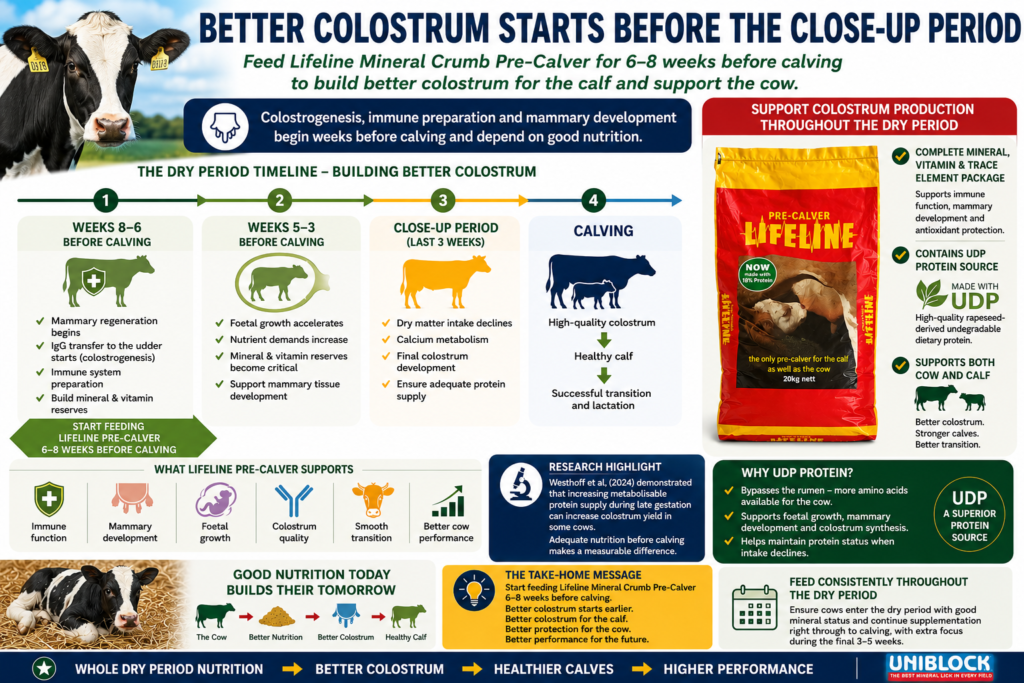
Colostrum is often viewed as a product of the final days before calving, but the biological process responsible for its formation begins several weeks earlier. Colostrogenesis, the transfer of immunoglobulins and accumulation of bioactive compounds within the mammary gland, can start around five weeks before calving. At the same time, mammary development, immune preparation and metabolic adaptation are taking place, all of which require an adequate supply of nutrients.
This means that the nutritional management of dry cows should not begin only when cows enter the close-up group. Instead, producers should consider how nutrition throughout the dry period influences the cow’s ability to produce high-quality colostrum and transition successfully into lactation.
Colostrum Production Begins Weeks Before Calving
Mineral nutrition plays a particularly important role
While much attention is placed on calcium management during the final weeks before calving, trace minerals and vitamins are involved in many of the biological processes that underpin colostrum production and immune function.
Selenium, zinc, copper, manganese and iodine all contribute to immune competence, mammary tissue development and antioxidant protection. Vitamins A, D and E also support immune function and help prepare both the cow and calf for the challenges surrounding calving.
Unlike energy or protein, many trace minerals function through enzyme systems and tissue reserves that require time to develop. Building and maintaining adequate mineral status throughout the dry period helps ensure these reserves are available when nutrient demands increase as calving approaches.
Minerals and Vitamins for Better Colostrum
Protein supply is an important consideration.
During the dry period, cows must support rapid foetal growth, mammary tissue regeneration and colostrum synthesis. All of these processes depend on an adequate supply of amino acids.
Recent research by Westhoff and colleagues (2024) demonstrated that increasing metabolisable protein supply during late gestation can increase colostrum yield in some cows. This highlights the importance of ensuring sufficient protein is available during the weeks leading up to calving, particularly as dry matter intake naturally declines.
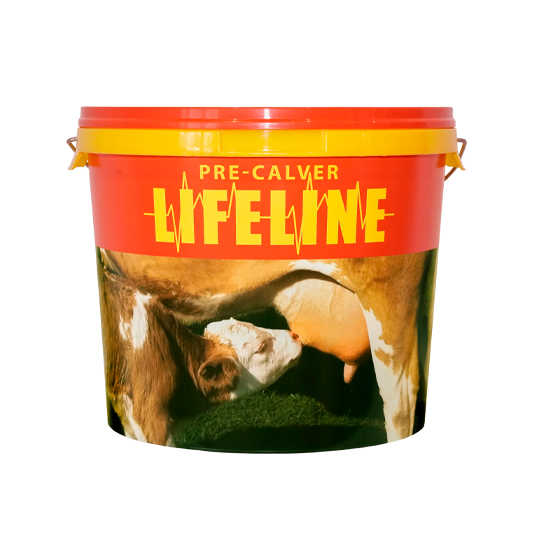
Providing high-quality sources of bypass protein can help support metabolisable protein supply during this period. Lifeline Mineral Crumb Pre-Calver contains high-quality rapeseed-derived UDP (undegradable dietary protein), providing an additional source of amino acids that can contribute to the cow’s requirements for foetal growth, mammary development and colostrum production.
When should supplementation begin?
If the primary objective is supporting calcium metabolism and reducing milk fever risk, the final two to three weeks before calving remain particularly important. However, if the goal is to support colostrum production, immune function, calf vitality and overall transition performance, there is a strong argument for taking a broader approach.
Research increasingly suggests that nutritional support should begin well before the close-up period. Cows should enter the dry period with adequate mineral status and continue receiving appropriate supplementation throughout dry cow management, with particular attention paid to the final three to five weeks before calving when nutrient demands accelerate.
When Should Dry Cow Supplementation Begin?
A whole-dry-period approach recognises that many of the biological processes influencing transition success occur long before visible signs of calving appear. Supporting cows consistently through this period can help establish the foundation for improved colostrum production and a smoother transition into lactation.
A Whole-Dry-Period Approach to Better Colostrum
Lifeline Mineral Crumb Pre-Calver has been designed to support this strategy. Alongside a comprehensive package of minerals, trace elements and vitamins, the inclusion of rapeseed-derived UDP protein helps address the increased amino acid demands associated with late gestation and mammary development.
While no single product can guarantee transition success, providing the correct nutritional support at the right time can help maximise the cow’s ability to meet the challenges of calving and early lactation.
The key message is simple: better colostrum does not start in the final few days before calving. It begins weeks earlier. By focusing on mineral, vitamin and protein nutrition throughout the dry period, producers can help support colostrum production, calf health, cow performance and overall transition success.
Building better colostrum starts earlier than you think.