


Article
What is selenium?
Selenium is an essential trace element, meaning it is required by animals in very small amounts (mg/d) for the maintenance of normal bodily functions.
Selenium acts in the body as a component of selenium-containing enzymes, or selenoproteins. Three groups of these selenoproteins are particularly important for stock health and performance.
| Selenium containing enzyme | Function | Impacts of selenium deficiency (enzyme not functioning correctly) |
| Glutathione peroxidases (GSHPx) | Antioxidant – neutralisation of free radicals | While muscle disease (muscular dystrophy) Ill-thrift, reproductive disorders |
| Thioredoxin reductases (TR) | Antioxidant – recycling of vitamins C and E in the body | |
| Iodothyronine deiodinase (ID) | Thyroid hormone activation (interaction with iodine), brown fat mobilisation in lambs and calves | Cold stress, neonatal mortality, iodine deficiency symptoms |
Free radicals & antioxidant systems
When discussing selenium, the terms ‘antioxidant’ and ‘free radical’ get used a lot, so it would be good to define these. During normal metabolism, highly reactive compounds called free radicals are produced. If allowed to build-up in the body, these go onto cause cell damage leading to a loss of cell structure; this is referred to as oxidative stress.

To neutralise free radicals and prevent build-up, the body has a natural antioxidant system which includes enzymes and vitamins. The selenium-containing enzyme GSHPx plays a crucial role in this system, working alongside vitamin E to neutralise free radicals produced from hydrogen peroxide. As the level of free radical production is influenced by an animals metabolic rate and inflammatory processes, growing/lactating animals and stock which are heat stressed or suffering from an infection will have higher requirements for antioxidant compounds, including selenium.
The importance of selenium for ruminants
So, an adequate supply of selenium is required to prevent animals from suffering from oxidative stress, but how does this impact health and performance?
When the requirement for selenium exceeds dietary intake, immune system functioning and fertility first start to suffer resulting in non-specific signs including increased somatic cell counts, retained placenta, dystocia and poor growth, this is known as a subclinical deficiency. As the condition progresses, damage to muscle tissue can start to occur causing muscular dystrophy (White Muscle Disease). Animals appear stiff, and become recumbent. Treatment with selenium/vitamin E injections is required at this point. Eventually, damage to the heart muscle will lead to cardiac failure.
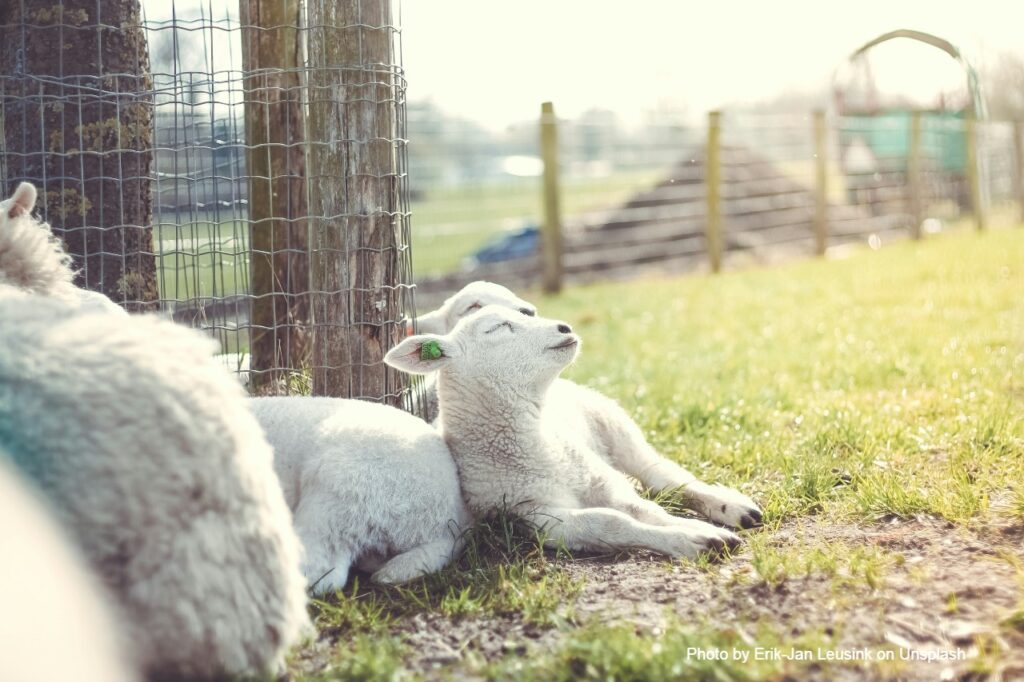
Because of its role in the mobilisation of brown fat, selenium is particularly important for newborn lambs and calves. As selenium is transferred across the placenta, ensuring dams receive adequate levels during late pregnancy will help to ensure lambs and calves are born with adequate selenium reserves. Where animals are born selenium-deficient they are often slow to thrive, at increased risk of hypothermia and may also develop White Muscle Disease.
Requirements for selenium vary, depending on level of production, disease status and vitamin E intake. Recommended levels are 0.1mg/kg DM for adult beef cattle and sheep, 0.2mg/kg DM for growing animals and 0.3mg/kg DM for dairy cattle.
The requirement for selenium supplementation
Selenium levels in UK grazing, forages and cereals are often low (<0.1 mg/kg DM) and therefore fail to meet ruminant requirements
Brewers grains and distillers products contain higher levels (0.2-0.4mg/kg DM), however these ingredients rarely comprise enough of the total diet to overcome the shortfall in forage. Selenium uptake by plants is reduced on acidic soils and where sulphur fertiliser has been applied, so stock grazing these areas are particularly at risk of deficiency.
Supplementation options
There are several different methods to provide supplemental selenium.
The first, which can be overlooked, is through the compound feed; commercial compounds contain varying levels of trace elements and it is important to consider this when assessing the requirement for additional supplementation. However as many stock will be on home-grown rations, or receiving small amounts of compound, other forms of supplementation are often required; these can be either ‘direct’ (bolus, drench) or ‘indirect’ (free access, in feed minerals).
Where there is a known history of deficiency, boluses or drenches have the advantage of ensuring that all animals receive the supplement, however these products will only supply a limited number of trace elements and vitamins.
Free-access supplements including blocks and buckets are cost-effective and convenient for pasture-based systems and have the additional advantage of supplying energy, protein and major minerals, alongside vitamins and trace elements.
In-feed or free-access powdered minerals can be formulated specifically to farm requirements and therefore offer a more targeted form of supplementation, however are less convenient for pasture-based systems.